
By: Roxanna Barling November 9, 2025
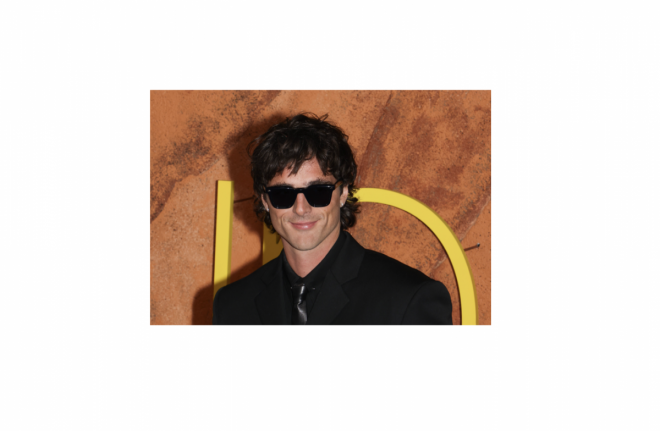
In the whimsical world of Mary Shelly’s reimagined story of Frankenstein, Jacob Elordi captivates his audience by asking life’s biggest question- “why?”
Text and Editing by Roxanna Barling / Hollywood News Wire Inc.
Interview by Izumi Hasegawa / Hollywood News Wire Inc.
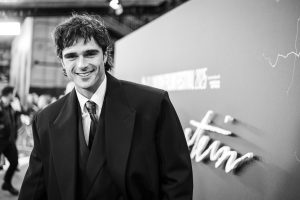
Photo by StillMoving.Net for Netflix
Q: When you read the script from Guillermo (Del Toro, the director) for the first time, did you recognize your part of yourself, your character in the role you played?
Jacob Elordi: Yeah, when I read it, I mean, every word of the Creature was something that I was asking myself. I mean, I get to be Job asking God “why”. You know, every scene was why. I mean, my whole life is a sequence of waking up and going, [laugh] “Why?” You know, so to actually get to ask that through such an eloquent character, I knew I had to do it. And there was one line in the script, and I’ve never had this happen before. And it’s when he looks at Victor (played by Oscar Issac) and he pulls the mask down. And I remember in the script, it said, “Now run.” And when I read that, I heard drums in my head. Like it was just like [makes drum noise]. And I knew in that moment, I was like I have to. I have to be in the trailer. No, but what’s funny is, the way that it plays in the trailer was exactly how I read it in the room. And see, like, that was like a tether. And so then I was like, when I had the meeting with Guillermo, I was, you know, silently desperate to do it. And then I was lucky enough to be able to hopefully execute it.

Q: What were your inspirations for the physical element of your performance of the Creature before he escapes?
JE: Well, I had a lot of ideas about what it means to be constructed of parts when I first read the script. What it means to have, you know, a calf from somebody else, a part of your brain from here, a part of your face from someone else, and how the kind of communication would work between your brain and the muscles. But something that was really instrumental was Guillermo had a great idea to study Butoh, which is this Japanese dance of death. And it’s sort of about the reanimation of a corpse. It wasn’t so specific, but it was a helpful way to kind of get inside my body. And then I just spent like an agonizing amount of time in front of the mirror. Which was just like my regular day. I read a baby development book, and I watched the children around me in my life, which was also bizarre. Like at a primary school, I stood outside. [laugh] And I watched my dog a lot as well. My dog has this kind of great innocence in the way that she moves and the way that she looks at things. And there was actually this wonderful moment in the hotel in Toronto just before we started. I was looking at her, and I was like, “What am I gonna do?” And I was just staring at her, and she was staring back at me. And she walked up to me, and we touched noses. And, [makes noise] we had like a little static electricity. And I knew then, I was like, okay. Like, I’m good. She gave me life. But these are all real sort of things that happened by just sort of being open to it.
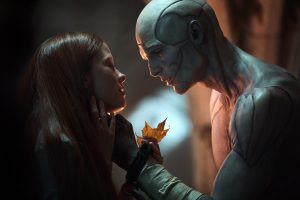
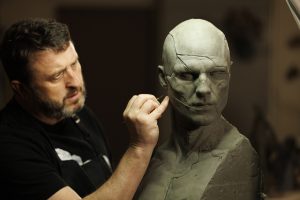
Q: The makeup was so complex. Did you ever just want to walk out of set with it on?
JE: No, there’s this amazing moment at the end of every day where they’d want you to do visual effects. Like, you’d have to go into a booth. And I learned that I could rip the prosthetic from the top. So before I could get to the visual effects tent, I would peel it off. And all this steam would come out of it. And I was free.
© 2025 Netflix, Inc.
Q: With the role of the creature being so complex and emotional how did you sustain, deliver, and protect yourself?
JE: You know, I have my own theory on that. And I think that all of that suffering and pain and trauma is already in our system. Like, I have a theory that I’ve already lived the grief of losing my mother, even though she’s still alive, you know. So for me, I think playing the Creature particularly was about tapping into whatever that part of your soul is. So it wasn’t like the film was making me suffer that way, in some new kind of way. It was just accessing something that was already there. So in terms of like coming out of it, you don’t really come out it, ’cause I sort of believe that it’s always in you. So in a way, the film was cathartic, because I got to look it in the face. And experience it, you know, and address it. And then as the film ends, like, and I got to end with a piece of hope as well, I got to look at the sun, and, you know, understand like what recourse do I have but to live. You know, like he says to him. And I think the film itself is how I get over making the film. The answer’s in the picture?
Frankenstein is now available to watch on Netflix.
