
By: Izumi Hasegawa July 8, 2026
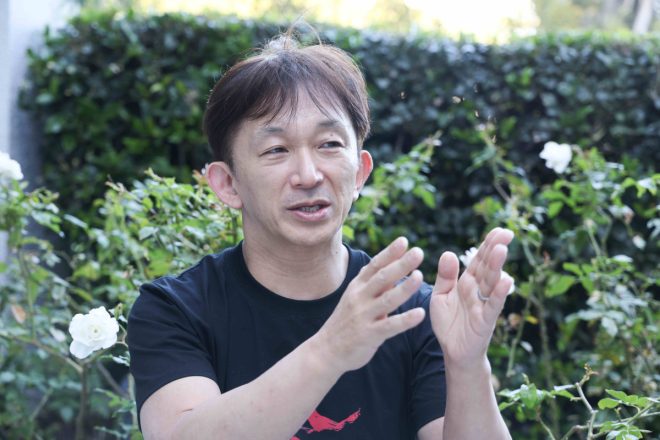
The movie The Furious is now playing in theaters across the United States and has also begun streaming; it is directed by Japanese filmmaker Kenji Tanigaki, who has built his career in Hong Kong. Unable to speak Cantonese and with no connections, he moved there and started from the bottom as an extra. After working as a stunt coordinator and action director, this is his third feature as director. I spoke with Tanigaki exclusively about the making of the film and the lessons he learned on set.
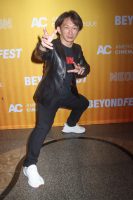
Q: How did you come to direct this film?
Tanigaki: I had worked with the producer, Bill Kong, several times before in the roles of action director. About three years ago, he told me he wanted to make an action movie — and if he was going to do it, he wanted to make one with incredible action. Apparently, an American screenwriter had said to him, “What’s going on with Hong Kong these days? There are no action movies anymore.”
The project originally started as a China-targeted film with a Chinese protagonist, and I was going to co-direct because my Mandarin isn’t that strong. In the end, I directed it alone.
Q: Tell us about the casting.
Tanigaki: For the past 20 years or so, the trend — exemplified by Keanu Reeves in The Matrix — has been for actors to train and become action stars. For this film, however, we cast actors who already had a strong foundation in martial arts.
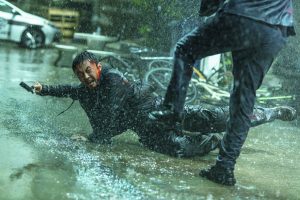
In recent years, there have been too many action movies featuring actors with no martial arts background, which has led to an increase in close-quarters combat using hand techniques. It’s easier for actors to learn and you only need to show the upper body. That’s exactly why I wanted to do something different. The reason I included a barrage of kicking scenes in the climax was to differentiate this film from the current trend of close-range fighting. Also, in classic Hong Kong movies, the guys throwing kicks were usually the villains — I realized we don’t see that much anymore.
Having a martial arts background is important, but it’s not enough just to bring in fighters. They need to be able to act as well, otherwise they lack expressiveness — and they have to fight as part of their character.
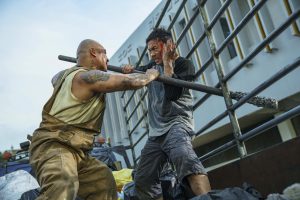
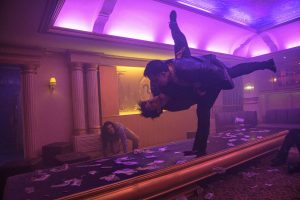
Q: The five-person brawl scene feels like one that will go down in film history. How did you shoot it?
Tanigaki: When I came up with the idea for that brawl, I thought it was interesting but wondered, “How on earth do we film this?” It started as a 2-on-2 fight between good guys and bad guys, but I changed it to a 2-on-2-on-1 situation with five people from three different factions. It’s a setup I’ve rarely seen, and it excited me. I didn’t know exactly how to shoot it, but I knew that if I were in the audience, I would definitely want to see it.
In action scenes, it’s crucial that the audience understands what’s happening. At the same time, it’s important to make viewers feel like they’re being hit too.
This time, I had the camera team join the rehearsals with the actors. By watching the action being created, they could memorize the moves. They learned, “When this punch comes, the next movement will be like this,” so the camera could follow properly. If you shoot without knowing the choreography, rushing around in a panic, the action won’t come across to the audience.
Q: Any wild stunt stories or big injury tales?
Tanigaki: In the ’90s, many of the films I worked on had low budgets, so there were only about three stuntmen. We’d take turns doing five or six insane stunts a day, which really trained me. They’d say things like “Fall like a pachinko ball.” But those aren’t hardship stories to me — they were fun. That’s just the kind of mentality I have. I went to Hong Kong because I wanted to do action, so being able to do it made me happy.
I haven’t been injured much, but the worst was three years ago when I failed a backflip and broke my neck. At that moment, my arms and legs stopped moving completely, so I prepared myself for a life in a wheelchair. That’s why my current life feels like bonus time.
Q: Are there any ironclad rules you learned from your seniors?
Tanigaki: “Don’t rely on your experience level.” Directors like Wong Kar-wai and Donnie Yen sometimes do things on set that make you think, “Is this guy really okay?” They deliberately reset their accumulated experience and challenge themselves.
Not organizing your shooting methods into a systematic approach is surprisingly important. Smart people often don’t make very interesting movies. Because they’re smart, they can already see what’s coming. On those kinds of sets, miracles rarely happen. In that respect, Wong Kar-wai, Donnie Yen, and Rurouni Kenshin’s Keishi Ohtomo are different. In a sense, you need a bit of madness. That craziness makes everyone think, “We should come up with something too.” I remember feeling that when a director is too normal and rational, the passion disappears. Since this is an action movie, I want to keep that wild, dangerous energy.
Q: Any advice or message for the younger generation?
Tanigaki: I think it’s important to “have many different standards.” People who have only worked in Japan tend to push Japanese ways on set. It’s not about which is right — knowing many different approaches is better, and being able to enjoy the differences is an advantage.
My 20s were about adventure. My 30s were a difficult period in Japan and Hong Kong where I struggled without much success. My 40s have been blessed with various projects, and I’ve been able to do more of what I want. Now in my 50s, I feel like going back to adventuring again. In the last year or two, doors to Hollywood have started opening, but I’m still a rookie.
Even though this film has received high praise, when I read the reviews, it still feels like people are looking down on it a bit. It doesn’t seem to be judged by the same standards as Steven Spielberg’s Disclosure Day, which was released on the same day. It reminded me of how Japanese people enjoy Indian films. So I feel like saying, “Don’t underestimate us,” and “I guess I just have to embrace it and keep going.”
I also believe that staying unique rather than becoming Hollywood-ized is the better way to survive in Hollywood. I’m a director who specializes in the action genre — action is all I have — so I think I should push that to the extreme.
Q: What’s next for you?
Tanigaki: Right now I’m working as action director on the sequel to Twilight Warriors: The Battle of Kowloon Walled City. The first film was a big hit in Asia, so Part 2 was promised from the beginning. After that, I expect to do either The Furious 2 or the Indonesian remake of the Korean film Ajeossi (The Man from Nowhere).
Translated by Jerry Jorgenson / Hollywood News Wire
